


My name is David. I live in Austin, Texas, and for the last three years, I worked as a mid-level software engineer. I always considered myself a rational, data-driven person. I never set foot in a casino, and I thought people who bought lottery tickets were just bad at math. But it turns out, I wasn’t immune to gambling; I just needed the casino to look like a sleek, professional financial tool on my smartphone.
This is the story of how an options trading addiction completely destroyed my life savings, and how a “free” investing app cost me $65,000.
The First Hit: Beginner’s Luck
It started during the pandemic. Like everyone else, I was stuck at home, bored, and seeing people online bragging about making thousands of dollars in the stock market. I downloaded a popular, commission-free trading app. At first, I just bought standard shares of tech companies. It was safe, but it was slow.
Then, I discovered options trading. The app made it dangerously easy to apply for options privileges. With a few taps, I was suddenly buying call and put contracts. My very first options trade was a lucky guess on a tech earnings report. I woke up the next morning, checked my phone, and saw I had made $3,000 in a single day.
That rush of dopamine was indescribable. I felt like a financial genius. I didn’t realize that I hadn’t invested; I had just pulled the lever on a slot machine and hit the jackpot.
The Downward Spiral: Trading Logic for Dopamine
Within months, my options trading addiction took over my entire life. I couldn’t focus on my actual job. During Zoom meetings, my eyes were glued to the red and green candlestick charts on my phone.
I stopped buying standard stocks completely because a 5% annual return felt pathetic compared to the potential 500% daily return of a risky options contract. But the market is ruthless. When my lucky streak ended, the losses were devastating. Options contracts expire, which means if you are wrong, your investment doesn’t just go down—it goes completely to zero.
I lost my initial $25,000 savings in a matter of weeks trying to “buy the dip” on risky tech calls.
The Climax: Revenge Trading and Debt
The psychology of losing money is terrifying. Instead of walking away, my brain convinced me that I just needed one more big win to make it all back. This is called “revenge trading,” and it is the death blow for any addict.
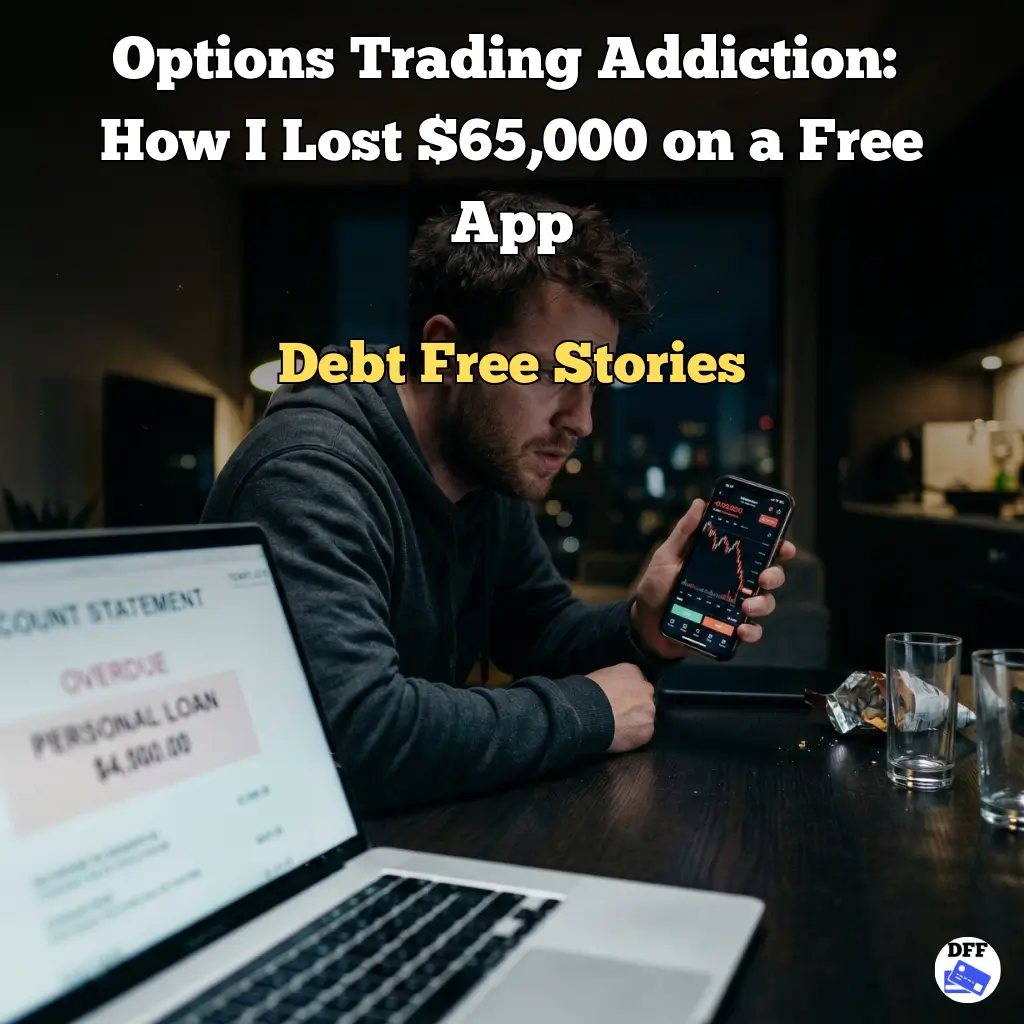
I was so desperate that I took out a $40,000 high-interest personal loan, telling myself it was just temporary “liquidity” to execute a foolproof trading strategy. I poured the entire loan into aggressive put options during a volatile week.
The market rallied instead of crashing. In exactly four days, my contracts expired worthless. The $40,000 evaporated into thin air. I was sitting in my apartment in Austin, staring at a screen that showed a balance of $0.00, while a new $800 monthly loan payment loomed over my head.
The Reality of App-Based Gambling
It has taken me a year of intense therapy to admit that I wasn’t an investor. I was a gambling addict in a tuxedo.
If you find yourself constantly checking the pre-market numbers, feeling physical anxiety when the market is closed on weekends, or hiding your trading losses from your partner, please seek help. Delete the apps. Remove your linked bank accounts. The house always wins, even when the casino is in your pocket.
The hardest part of any behavioral trap is admitting you have a problem. If David’s struggle with the stock market resonated with you, you need to understand that gambling takes many forms. Read our other powerful confession on how to get out of gambling debt to see the exact $42,000 recovery story and find hope.