


The hardest signature I ever had to write wasn’t for a car loan, a mortgage, or a marriage license. It was on a police report naming my own mother as a felon.
Most people think financial ruin comes from bad habits—spending too much on clothes, gambling, or living beyond your means. But I learned the hard way that sometimes, your financial life is destroyed before you even learn how to count money.
I spent my entire childhood dreaming of the day I turned 18. Like any teenager, I saw that birthday as the magical gate to freedom. I had a plan: move out, get an apartment, and buy my first car. I had been saving money from my summer job at a landscaping company for two years. I had the cash for a down payment. I was ready to conquer the world.
But I didn’t know that I was already a victim. I didn’t know that child identity theft had already destroyed my future while I was still watching cartoons.
The Dealership Humiliation
The day finally came. I walked into the Honda dealership with my chest puffed out. I picked out a used Civic—sensible, reliable. I sat down with the finance manager, a guy who looked like he’d seen it all, and handed him my driver’s license.
“Run it,” I said confidently. “I’ve never borrowed a penny in my life, so it should be a clean slate.”
I was wrong.
The manager stared at his screen. He clicked his mouse once. Twice. Then he frowned and turned the monitor toward me. The silence in that little glass office was deafening.
“Son,” he asked, “is there something you aren’t telling me?”
I laughed nervously. “No?”
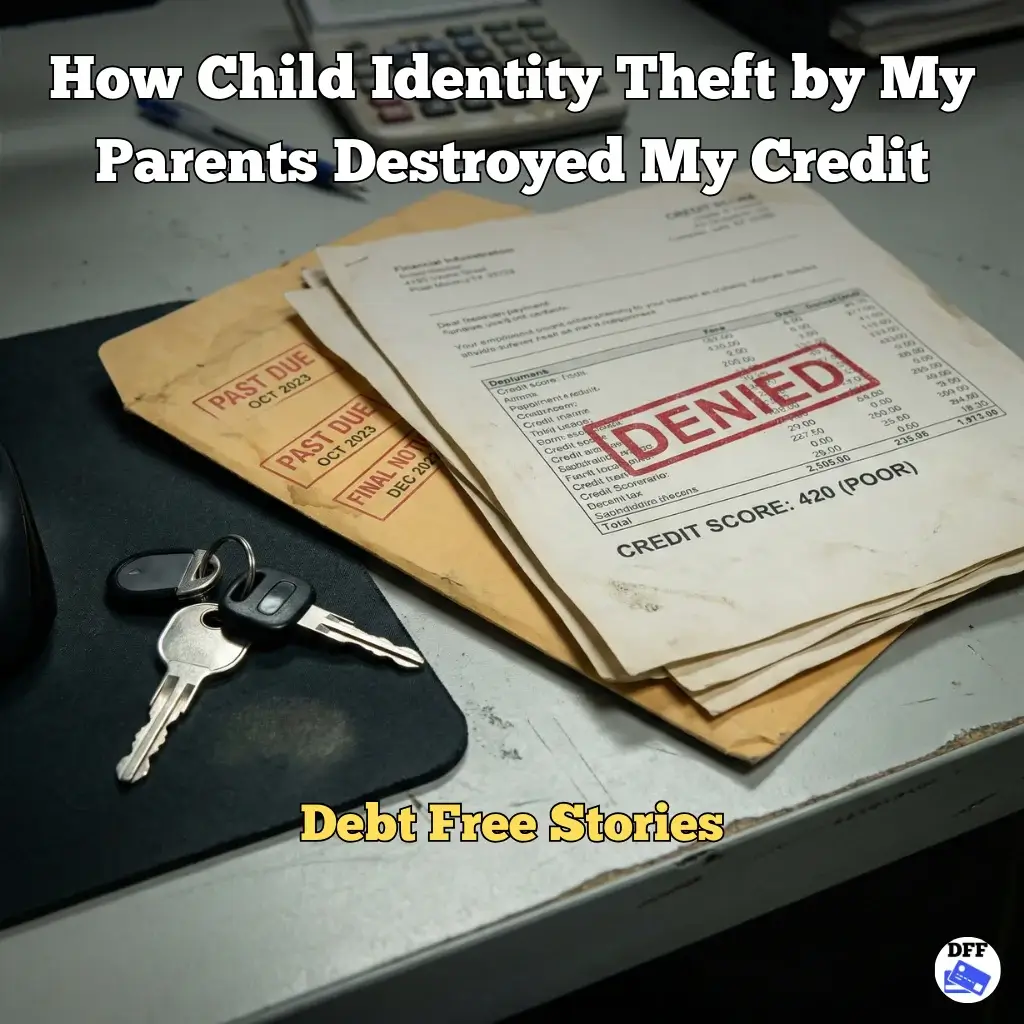
He pointed at the screen. “According to this, you have a defaulted utility bill from 2015, three maxed-out credit cards in collections, and a repossession on your record. Your score is 420.”
I froze. In 2015, I was eight years old. I wasn’t signing up for electricity bills; I was playing in the backyard. The manager looked at me with pity, but I didn’t feel sad. I felt sick.
The Kitchen Confrontation
I drove home in a rage, clutching the crumpled printout of the credit report like a weapon. I burst into the kitchen. My mom was cooking dinner; the smell of onions and garlic filled the room—a smell that used to mean safety.
I slammed the papers on the table.
“What is this?” I demanded.
I expected shock. I expected her to say it was a hacker, a mistake, a bank error. Instead, she started crying.
She didn’t deny it. She told me that years ago, when Dad lost his job, they needed a way to keep the lights on. Because their credit was ruined, they used my Social Security number to open accounts.
“It was child identity theft, Mom! That’s a crime!” I screamed, my voice cracking.
“We did it for the family,” she sobbed. “We were going to pay it back.”
The Betrayal
If it had just been the electric bill, maybe—just maybe—I could have forgiven them. But later that night, looking closer at the report, I saw the lie.
There were credit cards maxed out at department stores. There were charges at electronics shops for TVs we watched and restaurants we ate at.
They hadn’t just used my identity to survive; they had used it to upgrade their lifestyle. They leveraged my future to pay for their present comfort. The worst part wasn’t the money. It was realizing that the people supposed to protect me were actually the predators.
The Impossible Choice
I went to the bank the next day, hoping for a quick fix. I learned quickly that fixing child identity theft is a nightmare when the thief is family.
The bank officer gave me a cold, hard ultimatum:
- Accept the debt: I could acknowledge the $15,000 debt as mine, spend the next decade paying it off, and live with a ruined credit score.
- File a police report: I could report it as fraud. The debt would vanish, but an investigation would be opened against the perpetrators. My parents.
I stared at the phone for days. How could I send my own mother to jail? But conversely, how could I start my adult life in a financial hole I didn’t dig?
In the end, I chose myself.
I filed the report.
It tore the family apart immediately. My aunts and uncles called me selfish. My dad stopped speaking to me. I was painted as the ungrateful son who destroyed the family over money. But they didn’t understand that it wasn’t about the money—it was about the trust.
Conclusion
It has been five years. My credit is finally recovering, and I have that car now. But the cost was higher than any interest rate.
To anyone reading this: check your credit report the day you turn 18. Child identity theft is more common than you think, and sometimes the person stealing your future isn’t a shadowy hacker on the internet—it’s the person sitting across from you at the dinner table.
Family and finances are a dangerous mix. My story isn’t the only one. Read about how trying to help an ex-partner with a loan turned into a vehicle co-signer nightmare for someone else.