


My name is Emily. I grew up in a quiet, working-class suburb just outside of Columbus, Ohio. If you had asked me at eighteen what my life would look like at twenty-five, I would have painted a picture of a bustling design agency, a modern apartment in the city, and complete financial independence. They tell you that education is the ultimate investment in your future. They tell you that without a college degree, you will be left behind.
What they don’t tell you is that at eighteen years old, you are signing away your financial freedom before you even understand how compound interest works. I did everything I was supposed to do. I got great grades, built a solid portfolio, and got accepted into a prestigious private art school out of state.
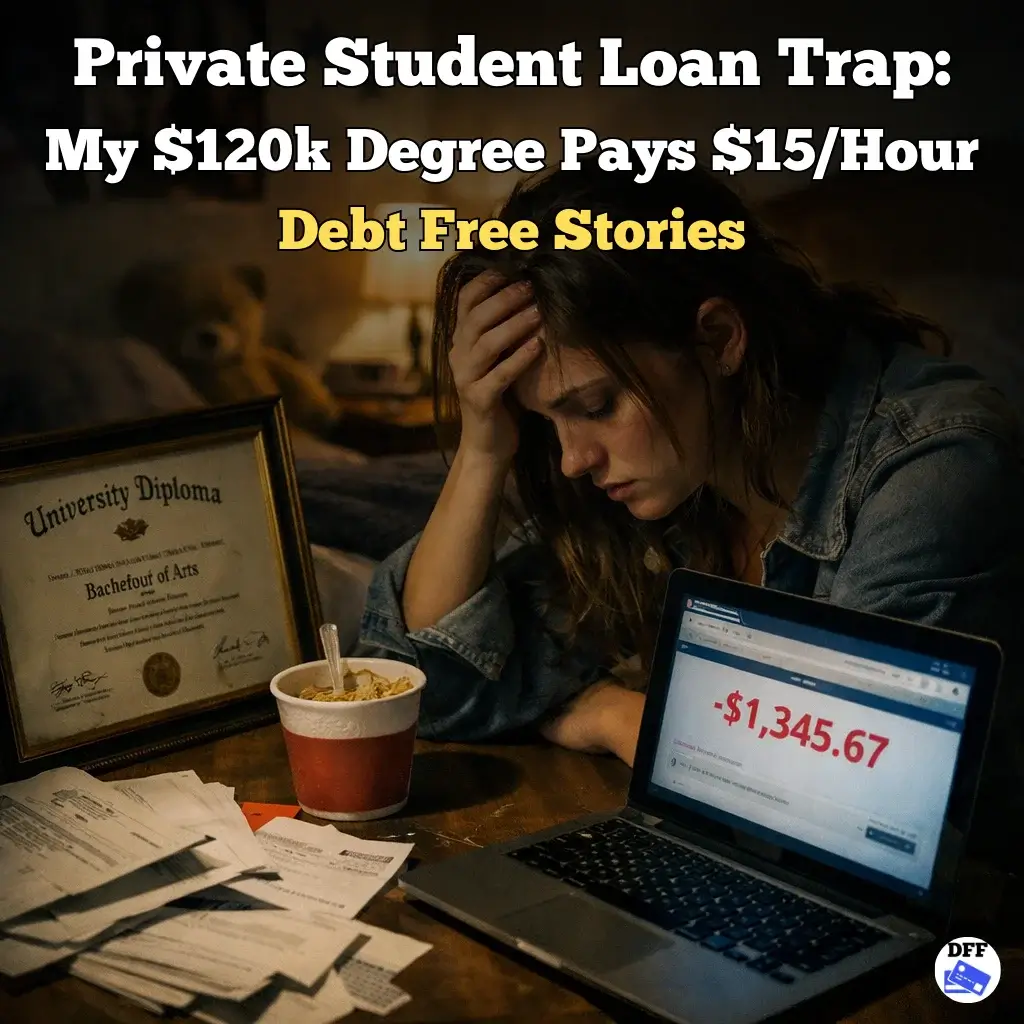
This is the story of how I fell into the private student loan trap, and how a $120,000 piece of paper left me working for $15 an hour.
The Dream School Illusion
We weren’t poor, but my parents in Ohio definitely didn’t have fifty grand a year lying around for out-of-state tuition. When the acceptance letter came, we were thrilled, but the federal student loans didn’t cover even half of the exorbitant cost.
The financial aid counselor at the university casually suggested private student loans to bridge the massive gap. “Everyone does it,” she said with a reassuring, practiced smile. “You’re going into a creative field. You’ll make great money after graduation, and paying this back will be a breeze.” I trusted her. I trusted the system that told me this was normal. I signed on the dotted line for four consecutive years. I was just a teenager; I barely looked at the variable interest rates that started at 9% and quietly crept up every single semester.
Graduation Reality: The Math Doesn’t Work
Walking across that stage to get my diploma was one of the proudest moments of my life. I felt invincible. But then the six-month grace period ended, and the reality of the American job market hit me like a physical blow.
I sent out hundreds of resumes. I interviewed for dozens of junior design roles. But the only job I could land was a generic administrative and entry-level design gig that paid $15 an hour.
Then, my first loan bill arrived in the mail: $1,200 a month.
Let me break down that math for you. After taxes, my take-home pay was barely $2,000 a month. Once I paid my $1,200 student loan, I had exactly $800 left for the entire month. Average rent in Columbus was around $1,100, which meant I couldn’t even afford to live with roommates. I had to put gas, car insurance, and groceries on a high-interest credit card just to survive. It was mathematically impossible to stay afloat.
The Nightmare of Variable Interest
The absolute worst part about the private student loan trap is that it lacks all the safety nets of federal loans. There is no income-driven repayment plan that adjusts to your $15/hour salary. There is no public service loan forgiveness. Private lenders do not care if the economy crashes, if your industry pays poorly, or if you lose your job.
When the national interest rates shifted, my variable rate spiked to a suffocating 13%. I was sacrificing everything—eating cheap ramen, never going out with friends, wearing old clothes—just to make my $1,200 payments every single month. But my principal balance wasn’t going down. The interest was eating every single dollar.
Five years after graduation, I had paid over $70,000 in cash to this loan company, yet my actual balance had grown to $125,000. It felt like I was shoveling dirt into a bottomless pit. I was working sixty hours a week between my main job and late-night freelance gigs, and I was still sinking.
Facing the Future and Moving Backward
Eventually, the math broke me. I had to pack up my small rented room and move back into my childhood bedroom in Ohio at 27 years old. The shame was paralyzing. I felt like a massive failure every time I saw my high school friends buying houses or getting married, while I was trapped in my teenage bedroom, funneling my entire paycheck to a faceless bank.
If you are a high school senior reading this, or a parent considering co-signing a loan for your child, please stop and listen to me. Look closely at the realistic return on investment of that degree. Do not take out six figures in private loans for an undergraduate degree. Go to a community college for two years. Go to an in-state public university.
Your future self will beg you to avoid the private student loan trap and not start your adult life with a six-figure anchor around your neck. There is no prestige worth this much pain.
If Emily’s story resonates with you, remember that you are not alone in your financial struggles. We share real stories to help you learn from others’ mistakes. Explore more confessions and survival strategies on the Debt Free Stories to find the support you need today.