

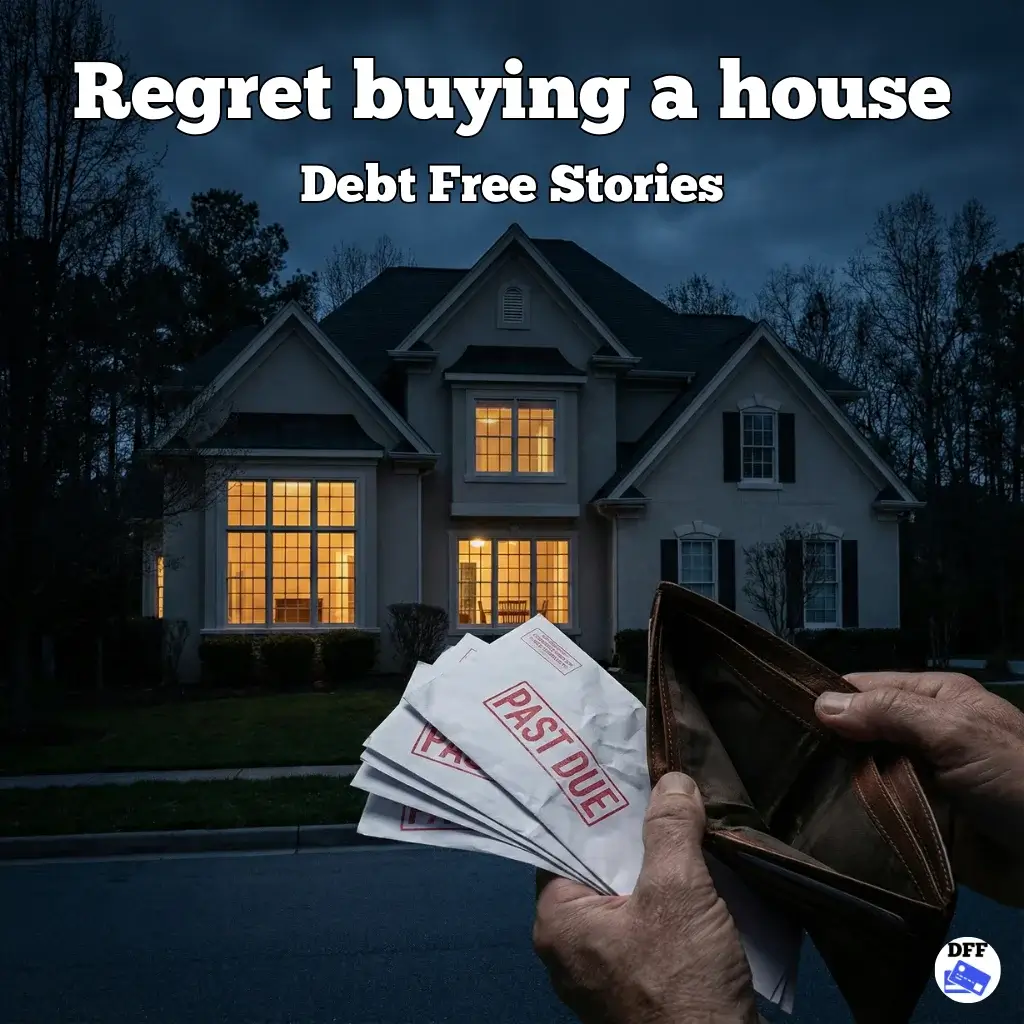

Looking back now, I can honestly say that I regret buying a house. But at the time, everyone told us that renting was “throwing money away.” They said buying a home was the smartest investment we could ever make, the ultimate badge of adulthood. So, when the bank pre-approved us for a $450,000 mortgage, we didn’t question it. We felt validated. We thought, “If the bank says we can afford it, we must be able to afford it.”
We bought a beautiful four-bedroom colonial at the very top of our budget. I remember the day we got the keys. We stood in the empty foyer, the sunlight streaming through the big windows, and popped a bottle of champagne. We felt like we had made it.
But the honeymoon phase lasted exactly thirty days. When the first mortgage payment was deducted from our account, the reality hit us like a freight train. After paying the mortgage, property taxes, and insurance, we had almost nothing left for food, gas, or savings. We had achieved the American Dream, but in reality, we had just signed up for a thirty-year prison sentence.
The Pressure and the Promise
To understand why we jumped, you have to understand who pushed us. I worked as a mid-level project manager and my wife was a substitute teacher. We worked hard for every dollar. But our “best friends,” Jason and Amanda, lived in a different reality. Jason worked for his father’s successful logistics company, and they had already moved into a massive forever home by age 25.
They were constantly in our ears. “Rent is dead money,” Jason would say over expensive dinners. “You guys are throwing your future away.” When we expressed hesitation about the massive monthly payments, Jason looked me in the eye and gave me what I thought was a safety net. “Listen,” he said, “Just buy the house. Trust me. If you ever have a tight month or get in a bind, I’ve got your back. I can float you a loan anytime. We are family.”
That promise was the final push we needed. We felt safe. We had a wealthy safety net. So, with our two-year-old daughter in tow, we signed the papers for a mortgage that took up 50% of our take-home pay.
The honeymoon lasted exactly thirty days. We quickly learned the brutal definition of being “house poor.” From the outside, we looked successful. We had the manicured lawn and the two-car garage that fit in perfectly with the neighborhood. But inside, the house was a hollow shell.
We had spent every penny on the down payment and closing costs. We couldn’t afford furniture, so for the first six months, our “dining room” was a pizza box on the floor. My wife and I slept on a mattress with no frame, and our daughter’s room was empty except for a crib we bought secondhand.
The stress began to bleed into our marriage. We stopped going out because we couldn’t afford a $50 tab. We stopped taking weekend trips. Every conversation revolved around the mortgage. And then came the hidden costs nobody warned us about.
The Betrayal
Six months in, the water heater exploded. In a rental, I would have just called the landlord. But now, I was the landlord. The repair bill was $1,500—money we simply didn’t have.
I swallowed my pride and called Jason. I reminded him of his promise to help if we got in a bind. I expected a quick Venmo and a “no worries, bro.” Instead, his tone was cold and distant. “Yeah, sorry man,” he said. “My dad is cracking down on expenses, cash is tight right now. I can’t help you.”
He hung up and didn’t call back. The next day, I saw him on Instagram posting from a vacation in Cabo.
We were alone. We had to put the repair on a credit card, adding high-interest debt on top of our massive mortgage. That was the moment the illusion shattered. I looked at the water stain on the ceiling and whispered the words out loud for the first time: “I regret buying a house.”
The Escape and The Lesson
We lasted exactly two years in that beautiful prison before we finally broke. The decision wasn’t easy, but the math was undeniable. We put the house on the market and sold it three months later. After paying the realtor fees and closing costs, we barely broke even. We walked away with almost zero profit, but handing over those keys felt like escaping a trap.
We also walked away from Jason and Amanda. We realized we had been going broke trying to keep up with people who had a safety net we simply didn’t have. We moved back into a modest three-bedroom rental, and the change was instant. We had money for furniture again. We could order pizza on a Friday night without panicking. For the first time in two years, we could actually breathe.
The experience taught me a brutal financial lesson that I tell everyone who will listen: Just because the bank approves you for a certain amount doesn’t mean you should spend it. The bank doesn’t care if you can afford to eat or sleep at night; they only care if you can pay them their interest.
I also learned a fundamental truth about housing: When you rent, the monthly payment is the maximum you will pay for housing. When you own, the mortgage is just the minimum you will pay.
If you are looking to buy right now, ignore the maximum approval number on your pre-qualification letter. Look at your actual life. Look at your savings. Don’t sacrifice your freedom—and definitely don’t sacrifice your friendships—for a guest bedroom you’ll never use.
Being “house poor” leaves you vulnerable to emergencies. When your mortgage eats all your cash, a simple car repair can force you into desperate decisions. [Read: The Payday Loan Trap] to see how a lack of savings turned a $500 problem into a $3,000 nightmare.


[…] – 01Dec2025 Exit Strategies Breaking the Cycle of Poverty in My Family Credit Nightmares Regret buying a house […]
[…] “Gambling isn’t the only financial trap that can feel suffocating. Sometimes, we make decisions thinking they are ‘smart investments,’ only to find ourselves trapped in a different way. Read this honest confession on why I regret buying a house while poor […]