


They say love makes you do stupid things. For me, the stupidest thing wasn’t a tattoo or a bad haircut. It was signing my name on a dotted line.
I was 24, in love, and financially naive. My boyfriend at the time needed a new truck for work. The problem? His credit score was in the low 500s. The dealership wouldn’t touch him unless he had someone with “strong credit” to back him up.
That someone was me.
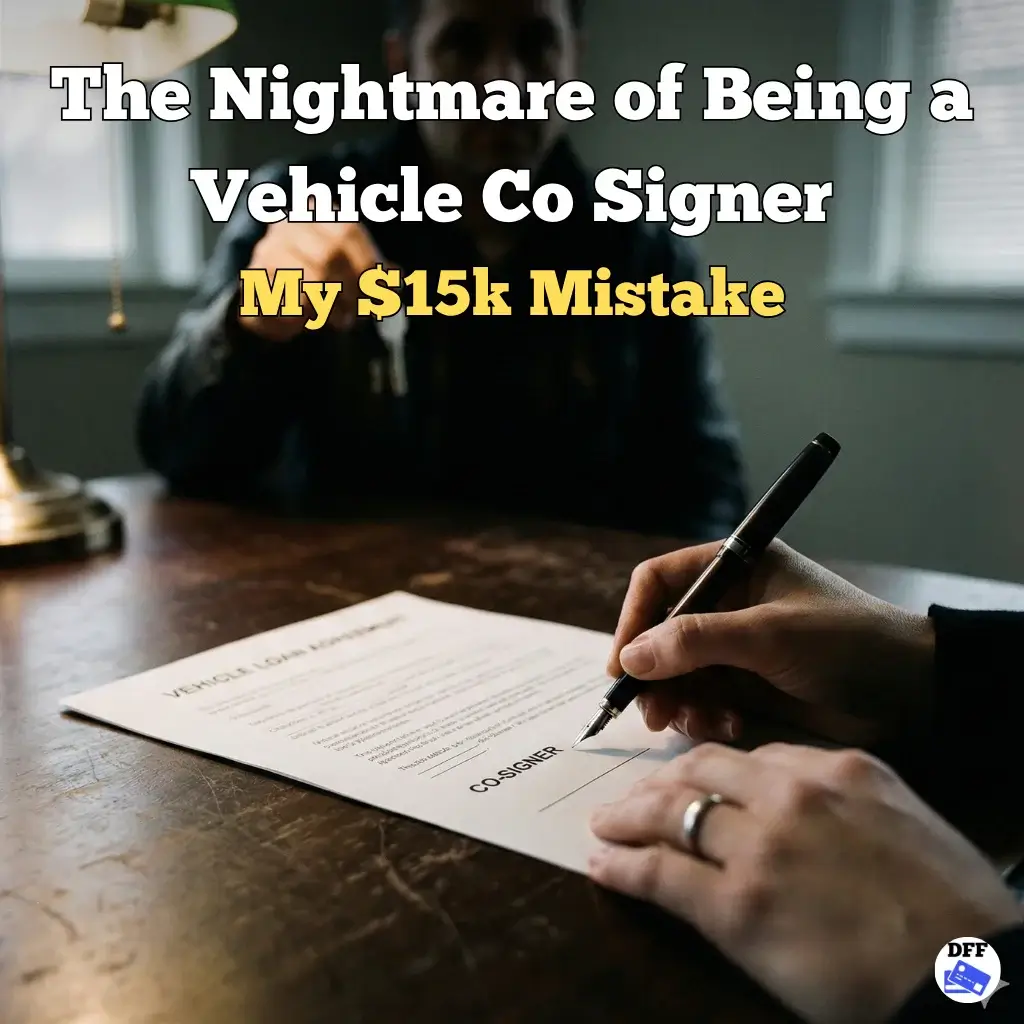
I remember sitting in the finance office. The salesman smiled at me and said, “It’s just a formality. He’s the one making the payments. You are just the vehicle co signer to get him a lower interest rate.”
It sounded harmless. I wanted to be supportive. I wanted to be the hero who made his dream truck possible. So, I picked up the pen and signed.
I didn’t know it then, but I had just handcuffed myself to a $15,000 anchor.
The Breakup (and the Silence)
Fast forward two years. The relationship didn’t just end; it exploded. I found out he had been cheating on me with a coworker for months. I was devastated and furious. I packed my bags, blocked his number, and we stopped talking completely. He kept the truck—probably to drive her around—and I tried to move on with my shattered life.
I naively assumed that because I had cut him out of my heart, I had cut him out of my finances. I thought, “He has a job. He loves that truck more than he ever loved me. Of course he’s going to pay for it.”
For six months, I lived in blissful ignorance. I didn’t check my credit report. I didn’t receive any calls. Then, one Tuesday morning, my phone rang. Unknown number.
“Hello, is this Sarah?”
“Yes, speaking.”
“We are calling to collect a debt of $1,800 for the past due payments on the Ford F-150.”
My stomach dropped through the floor. “You must be mistaken,” I stammered. “That’s my ex-boyfriend’s truck. We aren’t together anymore. You need to call him.”
The debt collector’s voice turned ice cold. “Ma’am, I don’t care about your relationship status. You are the vehicle co signer. Legally, this is 100% your debt too. And since he hasn’t paid in 90 days, we are preparing to repossess the vehicle and sue you for the difference.”
The Hard Truth About Co-Signing
That afternoon was my crash course in financial law, and let me tell you, the tuition was expensive. I learned the hard way that being a vehicle co signer doesn’t mean you are just a “backup” or a safety net. It is so much worse than that.
The debt collector made it brutally clear that the bank didn’t care who was driving the car to work every day or who had the keys in their pocket. They just wanted their money, and legally, I owed the full amount just as much as he did.
Then came the realization about the damage. Because he had stopped paying months ago without telling me, my credit score had quietly tanked behind my back. I’m talking a catastrophic drop of 110 points overnight just because of missed payments I didn’t even know existed.
But here is the part that really made me want to scream. Even though I was the one now on the hook for the payments, I discovered I had absolutely no rights to the car itself. My name wasn’t on the title as an owner, only on the loan as a debtor. I was trapped paying for a truck I couldn’t legally take back, couldn’t drive, and couldn’t even sell to stop the bleeding.
The $15,000 Lesson
I tried to contact my ex. He kept my number blocked. I was trapped. If I didn’t pay, the repo would go on my record for seven years, ruining my chances of ever buying a house.
So, I did the only thing I could. I drained my emergency fund. I started picking up extra shifts. I paid off the arrears just to stop the calls.
Eventually, the truck was repossessed anyway because I couldn’t keep up with the full payments on my own. The bank auctioned it off for cheap, and I was still on the hook for the “deficiency balance”—the money left over.
All told, that signature cost me over $15,000 and three years of credit repair.
Conclusion
If a friend, partner, or family member ever asks you to be a vehicle co signer, I want you to remember my story. The dealership will pressure you. Your loved one will promise they will never miss a payment.
Do not do it. If the bank—who does this for a living—doesn’t trust them to pay back the loan, why should you?
Love is great, but protect your credit score first. Because when the relationship ends, the debt stays.
This wasn’t my only financial disaster. If you want to read about a different kind of regret, check out my confession on how spending money on mobile games turned into a $3,000 secret debt.





[…] isn’t the only one. Read about how trying to help an ex-partner with a loan turned into a vehicle co-signer nightmare for someone […]