


I Spent $5,000 Trying to Be Someone’s Friend on the Internet
The beep of the card reader was the loudest sound I’d ever heard.
I was standing in line at a Trader Joe’s on a Tuesday evening. In my basket, I had a carton of eggs, a bag of frozen rice, and a cheap bottle of hot sauce. That was it. Dinner for the week.
The cashier, a teenager who looked like he’d rather be anywhere else, stared at me. Then he stared at the machine.
“It says declined, man. You want to try again?”
I felt the heat rush up my neck. I knew there was money in there. There had to be. I checked my banking app while the woman behind me sighed, shifting her weight impatiently. I logged in, the little loading circle spinning, mocking me.
Balance: -$34.50.
Overdraft fees. Again.
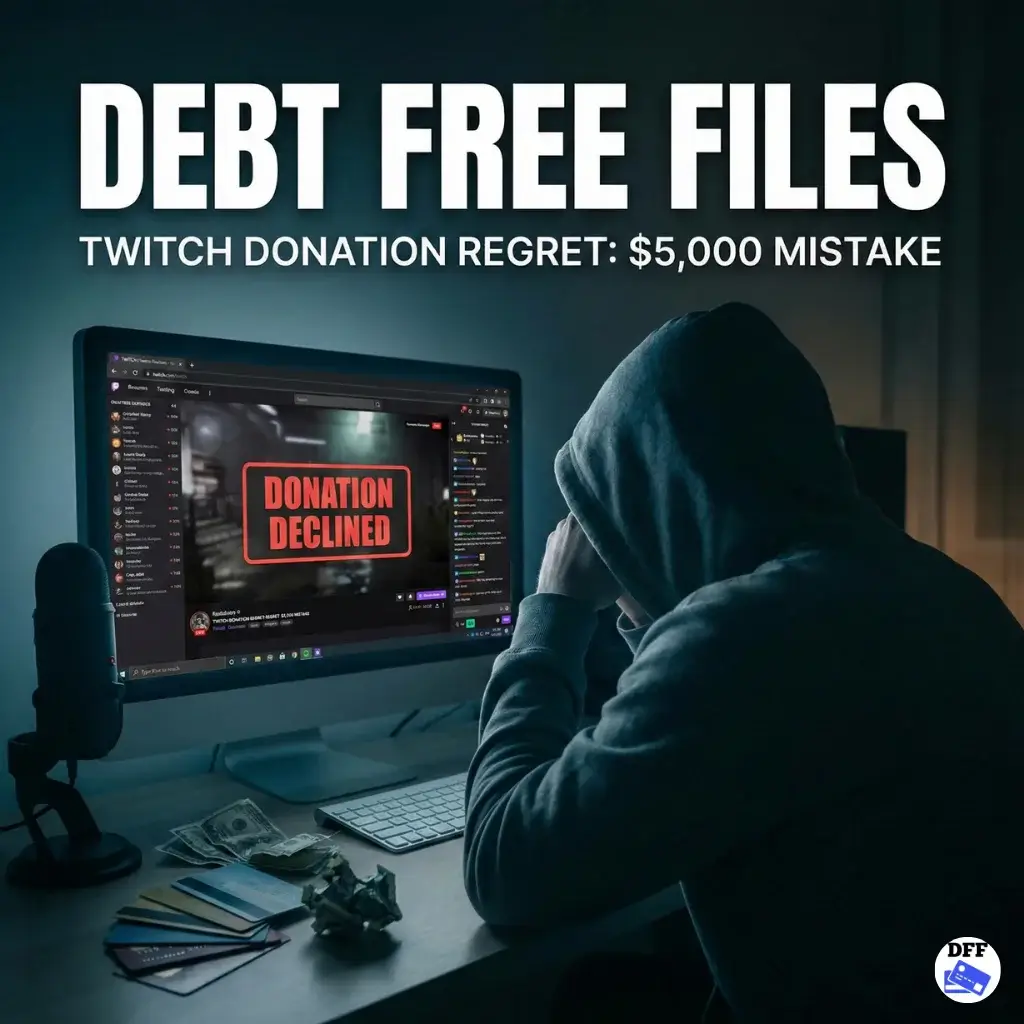
I didn’t have twelve dollars for eggs and rice. But looking back through my transaction history, the truth was staring me in the face. It wasn’t theft. It wasn’t a bank error. It was a long list of charges to “Twitch Interactive.”
$4.99 here. $25.00 there. $100.00.
In the span of six months, I had torched $5,000.
I walked out of that store without the food. I sat in my car, the engine cold, and just stared at the steering wheel. I wasn’t crying. I was just empty. It’s a specific kind of loneliness that hits you when you realize you went broke trying to buy friendship from a stranger who doesn’t even know your last name.
This is my confession. This is how I fell into the trap of Twitch donation regret.
The Dopamine Trap: How It Starts
It didn’t start with five grand. It never does.
It started with silence.
I had just moved to a new city. My apartment was quiet. Too quiet. I didn’t know anyone, and my job was remote. I’d finish work at 5:00 PM and just… sit there. The silence was deafening. So, I started putting on Twitch streams in the background. Just for the noise. Just to hear human voices.
I found a streamer. Let’s call him “K.” He was funny, charismatic, high energy. He played the games I liked. He had about 2,000 viewers usually. Big enough to be exciting, small enough that the chat wasn’t moving at the speed of light.
I watched for free for three weeks. I was a “grey name” in the chat. Invisible.
Then, one night, K was having a bad run in a game. He was getting frustrated. I wanted to cheer him up. I wanted to be part of the “crew.” So, I hit the button.
Subscribe: $4.99.
A few seconds later, a giant zombie animation popped up on the screen. A loud, triumphant sound effect played—like a shotgun racking. And then, he said it.
“Yo, George! Welcome to the Zombie Squad, my man! Thanks for the Prime sub, brother. Let’s get some HYPE in the chat!”
My heart actually skipped a beat.
I’m a grown man. I’m thirty-two years old. And yet, hearing a cool guy on the internet say my name gave me a physical rush I hadn’t felt in years.
Suddenly, the chat was filled with emotes. People were typing Welcome George! and One of us!
For five dollars, I wasn’t the lonely guy in the quiet apartment anymore. I was George, a member of the Zombie Squad. I mattered.
I didn’t know it then, but I was already hooked on parasocial relationship addiction. It felt like we were buddies. It felt like if I walked into a bar where K was hanging out, he’d wave me over.
But that feeling fades. The dopamine hit from a $5 sub lasts about ten minutes. Then the chat moves on. The streamer goes back to the game. You fade back into the background.
And you start wondering… how do I get that feeling back?
The Escalation: Buying Your Way to the Top
Once you subscribe, the barrier is broken. Your credit card is saved. One-click purchasing is enabled.
I started small. I wanted K to notice a joke I made. But the chat was moving too fast. So, I learned that Twitch bits cost real money, but they don’t feel like money. They feel like arcade tokens.
I bought 500 bits. About seven bucks. I used them to highlight my message. K laughed. “George with the 500 bits! That’s hilarious, dude. Good one.”
He laughed. At my joke.
That was the hook sinking deeper.
I started analyzing the “Leaderboard.” On the top of the chat overlay, there was a list: “Top Gifters of the Week.” The same three or four names were always there. The “Whales.” K treated them like royalty. He knew details about their lives. He’d ask them how their work was going.
I wanted that. God, I wanted that status.
I started gifting subscriptions to other viewers. This is a feature where you pay for other people to subscribe. It’s framed as “generosity” or “supporting the community.”
Really? It’s financial simping.
I wanted the badge next to my name that said “Top Gifter.” I wanted the recognition.
It became a competition. There was another user, “Sniper88,” who was always dropping 50 subs at a time. I felt this weird, toxic rivalry with him. If Sniper dropped 10 subs, I dropped 20.
The stream would enter a “Hype Train.” This is a gamified timer that appears on screen. If the viewers donate enough money within 5 minutes, everyone gets a special emote. It turns spending money into a team sport.
“Come on guys! We’re only 10% away from Level 5! Don’t let the train die!” K would scream.
And I would panic. I didn’t want the train to die. I didn’t want to disappoint him. So I’d swipe the card. $50 here. $100 there.
I was convincing myself that I was a “patron of the arts.” I told myself I was supporting a content creator. But deep down? It felt terrifyingly similar to the [OnlyFans addiction cycle] where you pay for a momentary connection that isn’t real.
I wasn’t paying for content. I was paying for acknowledgement. I was into deep Tier 3 subscriber debt, paying $25 a month just for a special badge, plus hundreds in donations, chasing a high that was getting harder and harder to reach.
The Rock Bottom Moment
The crash happened on a Friday night. It was K’s birthday stream.
I had been saving up for this. Well, “saving up” is a lie. I had put off my car insurance payment.
I wanted to make a statement. I wanted to be the hero of the stream. I typed out a long, heartfelt message about how much the community meant to me, how K had helped me through a dark time.
I attached a donation of $200.
That was rent money. That was grocery money. But in my head, I imagined the reaction. He would pause the game. He would put on sad music. He would read my message out loud to the 5,000 people watching. He might even tear up. We would have a “moment.”
I hit “Donate.”
The alert popped up on screen. A big, flashy animation.
At that exact second, K was in a intense firefight in Call of Duty. He was screaming at his teammate.
“Left! On your left! Shoot him! NO! You idiot!”
The alert played my sound. My message scrolled across the screen.
K didn’t even look at the camera. He was still yelling at the game.
“Oh, thanks for the two hundo, George,” he mumbled, his eyes glued to the enemy player. “Mods, can we ban that guy in chat? He’s stream sniping.”
That was it.
“Thanks for the two hundo.” Spoken with the same enthusiasm you’d give someone who passed you the salt.
He didn’t read my heartfelt note. He didn’t pause. He didn’t care.
I sat there, freezing cold. The stream carried on. The chat spammed “POG” and “W George.” But K had already forgotten.
The streamer ignored my donation. Not technically—he acknowledged the money. But he ignored me.
That was the moment the glass shattered. I looked at the screen and I didn’t see a friend. I saw an entertainer doing a job. And I saw myself. A guy sitting alone in the dark, $200 poorer, desperate for validation from a guy who wouldn’t recognize me on the street.
I realized, with a sick feeling in my stomach, that I am just a wallet to them.
To K, I wasn’t George. I was a transaction code. I was revenue.
The Financial Fallout
The next morning is when I found myself at Trader Joe’s with the declined card.
When I finally faced the math, it was ugly.
- Credit Card Debt: Maxed out at $3,500.
- Overdraft Fees: $150 in one month.
- Savings: $0.
I had spent $5,000. Do you know what $5,000 is?
- It’s a decent used car.
- It’s an incredible two-week vacation in Europe.
- It’s a completely fully funded emergency fund.
- It’s 6 months of rent in my city.
Instead, I had nothing. I had a digital badge next to my username in a chat room that I was too ashamed to visit anymore. I had “status” in a kingdom that didn’t exist.
I ate plain rice and hot sauce for two weeks. I had to sell my guitar—one of the few things I actually loved doing—just to make rent. Every time I looked at that empty guitar stand, I felt a wave of self-hatred that is hard to describe.
The Exit Strategy
Getting out wasn’t just about stopping the spending. It was about breaking the emotional addiction.
Here is exactly what I did, and if you are reading this feeling that same sickness in your gut, this is what you need to do:
- The Hard Unfollow: I didn’t just stop donating. I unfollowed K. I unsubscribed. I blocked the channel. I had to remove the temptation completely. You cannot be an alcoholic sitting in a bar.
- Remove the Cards: I went into my Twitch settings and deleted every payment method. I made it so I would have to physically get up, find my wallet, and type in the numbers if I wanted to spend. That friction saved me.
- Find Real Connection: This was the hardest part. I admitted I was lonely. I joined a local hiking group. Free. Real people. Real conversations. No credit card required.
If you take one thing away from my story, let it be this:
Those streamers are not your friends. They are providing a service. You are the customer. It is okay to watch. It is okay to be entertained.
But don’t light yourself on fire to keep a millionaire streamer warm.
Key Takeaways from My $5,000 Mistake:
- Parasocial relationships are powerful drugs. Your brain releases real dopamine for fake interactions. Be aware of it.
- Bits are money. Don’t let the gamification fool you. 100 bits is a dollar. Treat it like cash.
- The “Hype Train” is a marketing funnel. It uses peer pressure to make you spend. Do not board the train.
- If you are donating to get noticed, stop. You are paying for a shoutout, not a friendship.
- Remove “One-Click” buying. Add friction between your impulse and your bank account.